News
Nagdhunga Tunnel Toll Starts November 1, Cars Pay Rs. 65
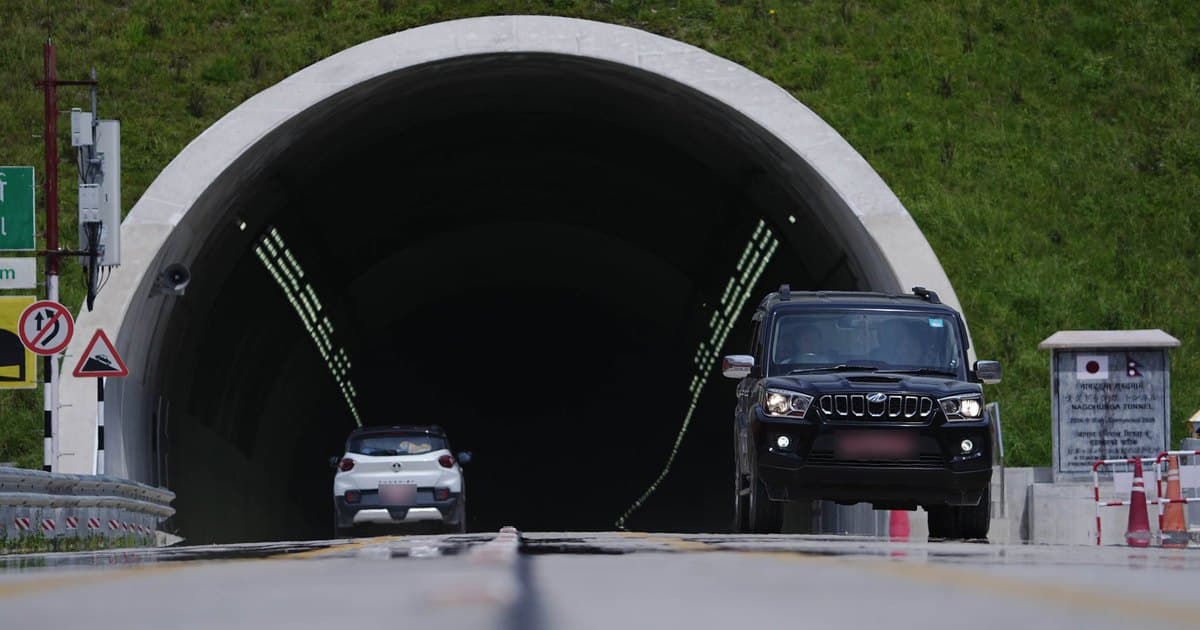
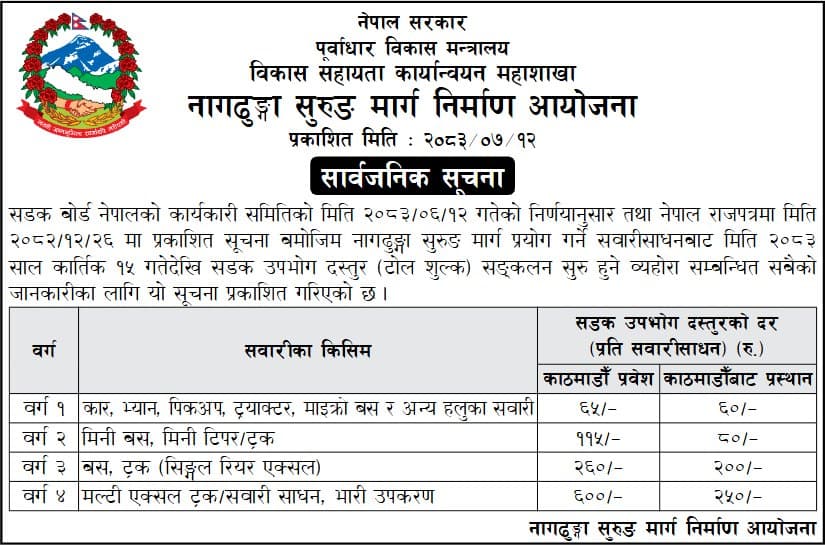
Vehicles using the Nagdhunga tunnel will have to pay a toll from Kartik 15 (November 1). The Nagdhunga Tunnel Construction Project published the rates in a public notice on Thursday, ending the free trial period that began when the tunnel opened on July 27.
The toll depends on the type of vehicle and the direction of travel, with a higher charge for entering Kathmandu than for leaving it. Cars, vans, and other light vehicles will pay Rs. 65 on the way in and Rs. 60 on the way out.
Category | Vehicles | Entering Kathmandu | Leaving Kathmandu |
|---|---|---|---|
1 | Cars, vans, pickups, tractors, microbuses, and other light vehicles | Rs. 65 | Rs. 60 |
2 | Minibuses, mini tippers, and mini trucks | Rs. 115 | Rs. 80 |
3 | Buses and single rear axle trucks | Rs. 260 | Rs. 200 |
4 | Multi-axle trucks and vehicles, and heavy equipment | Rs. 600 | Rs. 250 |
The rates follow a September 28 decision by the executive committee of Road Board Nepal and a notice published in the Nepal Gazette in April. The project has said the inbound toll is higher because the tunnel spares vehicles the uphill climb to Nagdhunga, saving time and fuel. Leaving the valley, the old road runs downhill, so the toll is lower.
How to Pay
The toll can be paid with an N-Tag or a QR code. An N-Tag is a prepaid RFID sticker fixed to the windscreen and linked to the owner's bank account. A reader at the toll gate detects it, takes the toll from the account, and opens the barrier.
N-Tags are issued by Class A commercial banks and their authorised agents under Nepal Rastra Bank's payment rules. Owners first register the vehicle on Road Board Nepal's N-Tag website, then take the submission number, the vehicle's bluebook, and an identity document to a bank or agent.
Who Can Use the Tunnel
The 2,688 m tunnel links Nagdhunga in Kathmandu with Sisnekhola in Dhading and bypasses the congested Nagdhunga climb. Private cars, jeeps, and vans have been using it on a trial basis since August.
Motorcycles, scooters, three-wheelers, pedestrians, and non-motorised vehicles are not allowed inside. Vehicles carrying petrol, diesel, gas, or explosives are also barred and must continue to use the old road.